
Swamp Cooler Leaks: How an Evaporative Cooler Can Damage Your Roof and Ceiling
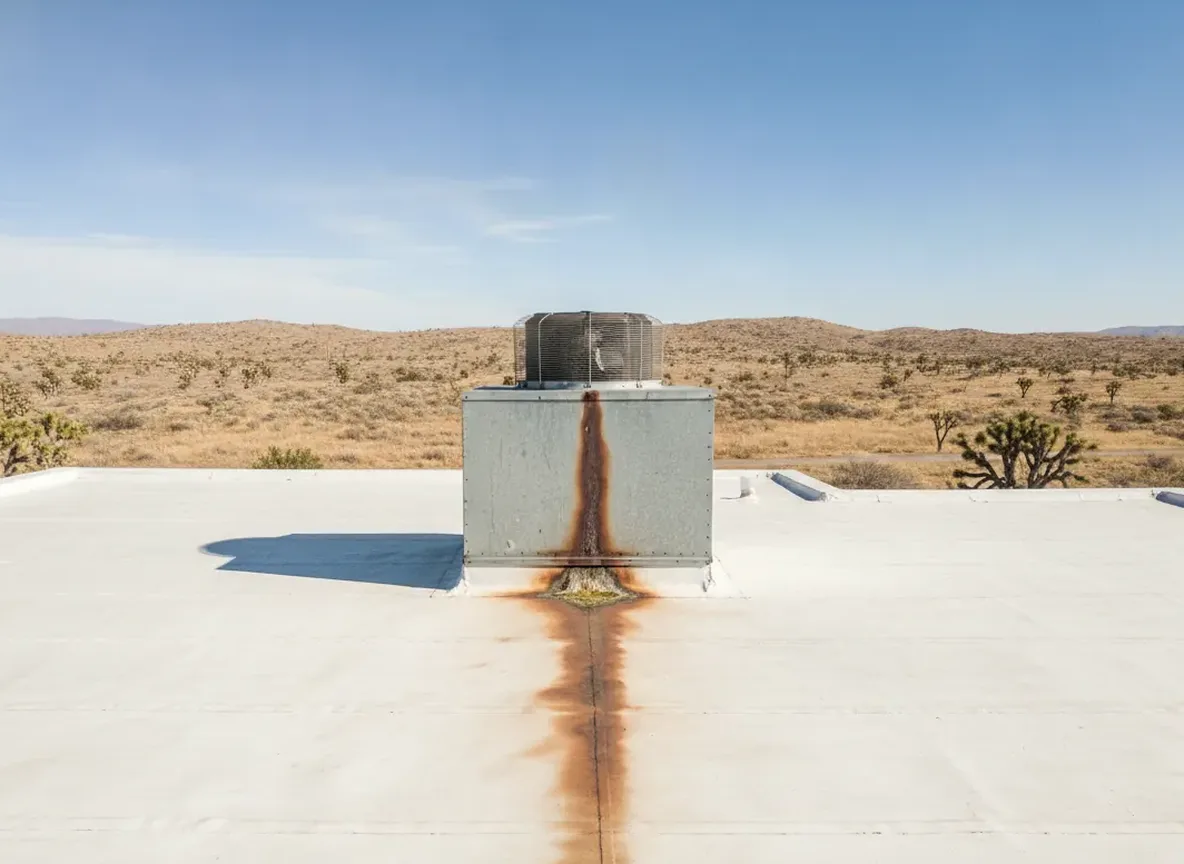
A rooftop swamp cooler works by pouring water over pads while a fan pulls hot air through them. That means a big box of water sits on your roof, right above your ceiling, for months at a time. When something in it fails, the water can run across the roof, into the duct opening and down through the ceiling, often before anyone notices. This guide explains how evaporative coolers leak, the warning signs, what to do first, and who to call for the cooler, the roof and the water damage.
Coolers work hard here. Lancaster and Palmdale each average about 36 days a year at 100°F or hotter (NOAA normals), so if your home has a rooftop swamp cooler, it may run most of the day from June through September.
Do this first. Turn the cooler off at its wall switch or thermostat, and close the valve on the small water line that feeds it if you can reach it safely. Keep everyone out from under a sagging or dripping ceiling. Turn off power to wet areas only if you can reach the breaker panel without standing in water. Don't climb onto a wet roof or a hot roof in the afternoon; leave the roof to a pro. Photograph the ceiling, the vent and any water before cleanup, then call your insurer.
How a swamp cooler leaks into the house
Most cooler leaks come from a handful of parts:
- A stuck float valve. The float shuts off the water when the pan is full. If it sticks open, the pan overflows and water runs out of the cabinet.
- A rusted or cracked pan. Older metal pans rust through, and the water drains straight onto the roof or into the duct.
- Supply and bleed lines. A cracked supply line, a loose fitting or a clogged bleed-off line can leak a steady stream. A supply line that wasn't drained can split in a winter freeze.
- Pump and distribution tubes. A cracked tube or a clogged distributor can spray water past the pads.
- The roof curb and flashing. The seal where the cooler and its duct meet the roof wears out. This is often the culprit when the ceiling leaks "only when it rains."
- The duct opening. Water that gets past the pads or the cabinet can drop straight into the supply duct and come out at the ceiling vent.
Warning signs to watch for
- A brown ring or stain on the ceiling near the cooler's supply vent
- Drips or a damp grille at the vent
- Sagging or soft drywall, or paint that bubbles
- A musty smell when the cooler runs
- Water stains, rust streaks or algae on the roof around the unit
- A higher water bill, or a cooler you can hear refilling constantly
A small stain can hide a lot of wet insulation above it. If the stain is growing or the drywall is soft, treat it as active water damage.
Who to call: cooler, roof and water damage
A cooler leak is usually two or three jobs:
Fix the source
An HVAC tech repairs or replaces the cooler, pan, float and lines. A roofer repairs the curb, flashing or roof around the unit. In California, these are separate CSLB license classes (C-20 for HVAC and C-39 for roofing).
Deal with the water
A restoration company handles the wet ceiling, insulation and drywall: it checks how far the water spread, removes materials that can't be dried, and dries the ceiling cavity with air movers and dehumidifiers while taking moisture readings. See water extraction and mitigation and the swamp cooler section of burst and frozen pipe water damage.
Repair and finish
Once readings show the area is dry, the ceiling is patched or replaced, textured and painted. This is usually billed separately from the drying.
Water that sat in a cooler pan isn't always clean. The company will decide which category it is, which affects what has to come out.
Can a swamp cooler leak cause mold?
It can. The air outside is dry, but the space above a ceiling isn't. Wet insulation and drywall trapped in a closed ceiling cavity can stay damp for days, and that's long enough for mold to start. A cooler that leaks a little every day all summer is a bigger mold risk than one sudden overflow. If you see spots, smell mustiness or the stain keeps coming back, read mold remediation after water damage.
California doesn't issue a mold-specific license, and the state hasn't set a safe mold level. CSLB licensing still applies to remediation and rebuild work of $1,000 or more.
Seasonal care that prevents leaks
Spring start-up: have the cooler checked before the first hot week. Replace worn pads, clean the pan, check the float and pump, and look at the supply line and bleed line for cracks. Check the roof seal around the curb.
Fall shutdown: before the first freeze, turn off and drain the water line to the cooler, empty the pan, and close or cover the duct opening so cold air and rain stay out. Antelope Valley nights drop below freezing often enough to split an undrained line; more on that in the frozen pipes guide.
All summer: glance at the ceiling under the vent now and then, and listen for a cooler that never stops filling.
Insurance for a cooler leak
Homeowners policies usually cover sudden and accidental water damage, such as a line that bursts, but usually exclude gradual leaks, wear and tear, and mold that grows from them. The cooler or roof repair itself may not be covered even when the water damage is. Read your own policy and call your insurer early. This is general information, not legal or insurance advice.
California homeowners have the right to choose their own licensed contractor; your insurer can't require you to use a particular company (Insurance Code §10103.5; 10 CCR §2695.9). If you rent, tell your landlord right away. The building and its insurance are usually the owner's responsibility.
What a ceiling leak costs to dry
| Item | Typical range |
|---|---|
| Per sq ft: clean water (Category 1) | $3–$4 |
| Per sq ft: gray water (Category 2) | $4–$6.50 |
| Water mitigation (extraction and drying) | $4–$12 per sq ft |
| Mold remediation | $1,200–$3,750 typical ($10–$25 per sq ft) |
Cooler and roof repairs are billed separately by an HVAC tech or roofer, and ceiling repair is usually separate from the drying. For a planning range on the water damage part, use the calculator in the water damage restoration cost guide for Lancaster, CA; it has a swamp cooler checkbox.
Before you sign with anyone, check their license at cslb.ca.gov or call 800-321-2752. If a repair needs a building permit, California requires a licensed contractor for it, whatever the price.
Frequently asked questions
Why is my swamp cooler leaking water through the ceiling?
The most common causes are a stuck float valve that lets the pan overflow, a rusted or cracked pan, a cracked supply or bleed line, or a worn roof seal around the cooler. Water that gets into the duct often comes out at the ceiling vent.
My cooler only leaks when it rains. What's wrong?
That usually points to the roof curb or flashing around the cooler, or a duct opening that isn't sealed or covered. A roofer or HVAC tech can find the gap. Have any wet ceiling checked with a moisture meter too.
Can swamp coolers cause mold?
A leaking cooler can. Wet insulation and drywall inside a closed ceiling can stay damp for days even in dry desert air, and slow daily leaks are the biggest risk. Fix the leak, dry the area, and watch for spots or a musty smell.
Who do I call first for a swamp cooler ceiling leak?
Turn the cooler off and close its water line first. Then call an HVAC tech or roofer for the source and a restoration company for the wet ceiling. Call your insurer, and if you rent, your landlord.
Get quotes from local restoration companies
Antelope Valley Fire & Water Damage is a free quote service, not a restoration company or contractor, and it does not do cleanup, drying, mold work or repairs. Describe the damage once, and independent restoration companies serving Lancaster, Palmdale and the rest of the Antelope Valley can reply to you directly. You sign any contract directly with the company you choose and pay that company directly. Companies may pay to receive requests, and there is no obligation to hire anyone. Request free quotes, or call (877) 265-2390 to be connected with a local restoration company.